

Overview
Many parents may be concerned about their children’s delayed speaking. Even while each child grows at their own rate, noticeable speech and language delays can occasionally be an indication of deeper problems that need to be addressed. The American Speech-Language-Hearing Association explains the causes and symptoms of delayed speech in children and offers practical methods to promote and encourage language development. If a child fails to meet specific language milestones, early intervention may help prevent long-term communication difficulties.
Reasons for Postponed Speech

Children’s delayed speech can be caused by a number of things, such as environmental conditions, cognitive disabilities, or hearing problems. Because they may not hear words clearly enough to mimic them, children with hearing loss, for example, may not establish normal speech patterns. Speech delays may also be caused by illnesses like intellectual disability and autism spectrum disorder (ASD). Speech development may be hampered in the early years by inadequate language exposure. Consulting with medical experts is crucial in order to pinpoint specific causes and develop a customized approach for every child.
How to Get Past Speech Delays
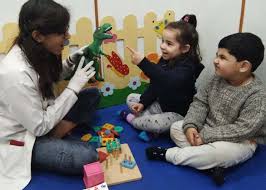
Participating in regular, intentional language-rich activities is crucial for overcoming speech impairments. Children are exposed to language through simple activities like singing songs, reading books aloud, and describing daily routines. Speech therapists frequently advise playing games that promote vocal expression, like pretend play or naming objects around the house, as these activities improve expressive abilities and vocabulary. Speech therapy can offer structured, focused interventions to address certain speech and language goals for kids who experience challenges
Speech Therapy’s Function


Children with speech and language delays can be diagnosed and treated by speech-language pathologists (SLPs). An SLP can help a kid with language understanding, sentence construction, and pronunciation through consistent therapy sessions. They frequently involve the youngster in pleasurable, interactive activities that resemble play in order to make learning important skills joyful. Early intervention and speech therapy have been shown to be successful in helping children with delays make notable progress in their communication skills.
**Aiding in the Development of Speech Outside of therapy, parents are essential in fostering their child’s language development. Talking to the youngster often, even if it’s just a simple conversation, helps them practice speaking and understanding language. A supportive environment for language development can be established by responding to non-verbal cues, promoting sound imitation, and providing positive reinforcement. Daily time spent on language-rich activities improves the relationship with the child and gives them a safe environment in which to grow as a communicator.

In conclusion
Children that experience speech impairments are not unusual, and many may overcome these obstacles with the correct support. Significant progress can be made by identifying the symptoms early and doing speech-improving activities at home, with professional assistance as required. Parents can enable their children to flourish by providing them with continuous, caring support in correcting speech impediments.
Citations
1.”Speech and Language Developmental Milestones,” American Speech-Language-Hearing Association.
2. The National Institute on Communication Disorders and Deafness. “Speech and Language Developmental Milestones.”
4. Staff at the Mayo Clinic. “Child Speech Delay: Causes, Symptoms, and Treatment.”
5.”Promoting Optimal Development: Identifying Infants and Young Children with Developmental Disorders,” American Academy of Paediatrics.
6.”Effects of Early Intervention on Language Development in Children with Delays,” Research in Developmental Disabilities Journal.